Smart Factory
AUTOXING has developed a full-scenario intelligent logistics solution centered on lightweight industrial AMRs for factory applications, covering production line logistics, warehouse distribution and cross-area material transportation. Integrated with self-developed autonomous driving technology, cloud dispatching system and open development platform, this solution addresses core pain points of traditional factory logistics including low efficiency, labor shortages, crude management and insufficient flexibility. Full introduction is provided from five dimensions: solution architecture, core product matrix, technical strengths, deployment modes and typical scenarios.
1. Overall Solution Architecture
AUTOXING factory AMR solution adopts a three-layer "Terminal-Transmission-Cloud" framework:
- Terminal (Robots): A full range of mobile robots including delivery, underlift, towing, forklift and roller-composite models, executing physical tasks such as material transportation and production line docking.
- Transmission (Dispatching & Communication): RCS dispatching system, V2X near-field coordination, interconnection of elevators, automatic doors and IoT devices, realizing multi-robot collaboration, traffic management, task queuing and equipment linkage.
- Cloud (Management & Data): Robot management platform, operation monitoring dashboard, remote deployment tools and open APIs, supporting map management, task issuing, real-time status monitoring, data analysis and seamless integration with WMS, MES and ERP systems.
The solution supports 3 operation modes: public cloud, private deployment and fully offline operation, matching different factory network conditions and data security standards.
2. Core Product Matrix
Diversified AMRs and supporting equipment are offered to meet varied transportation demands across all factory links:
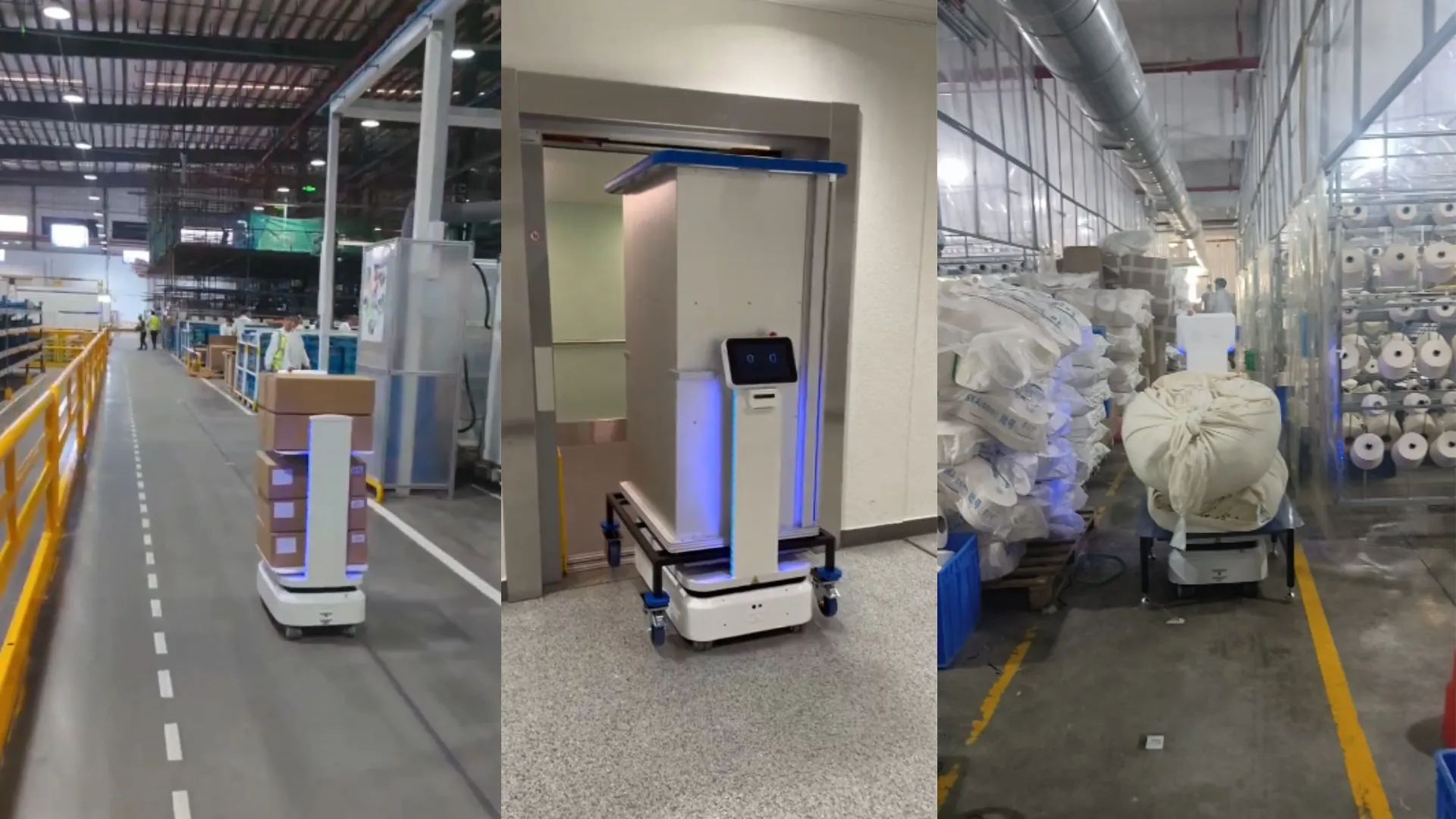
1. Lightweight Industrial Delivery Robots (Flagship Product Line)
- Representative models: AX6112 (80kg load), AX6113 (150~300kg load), AX8113 (600kg load), AX2112 (independent multi-bin distribution)
- Core features:
- Dynamic navigation based on global maps, nearly zero-cost remote deployment, ready for operation within 10 minutes.
- Autonomous obstacle avoidance, automatic elevator access, automatic door crossing and cross-floor operation.
- Combinable multi-bin modules, scheduled fixed-route patrols, 7×24 non-stop operation.
- Application: Production line feeding, side-line material delivery, quality inspection sampling and finished goods warehousing.
- Market coverage: Widely applied in 3C electronics, semiconductors, precision instruments, food & beverage, pharmaceutical manufacturing and other industries.
2. Underlift AMRs (S Series)
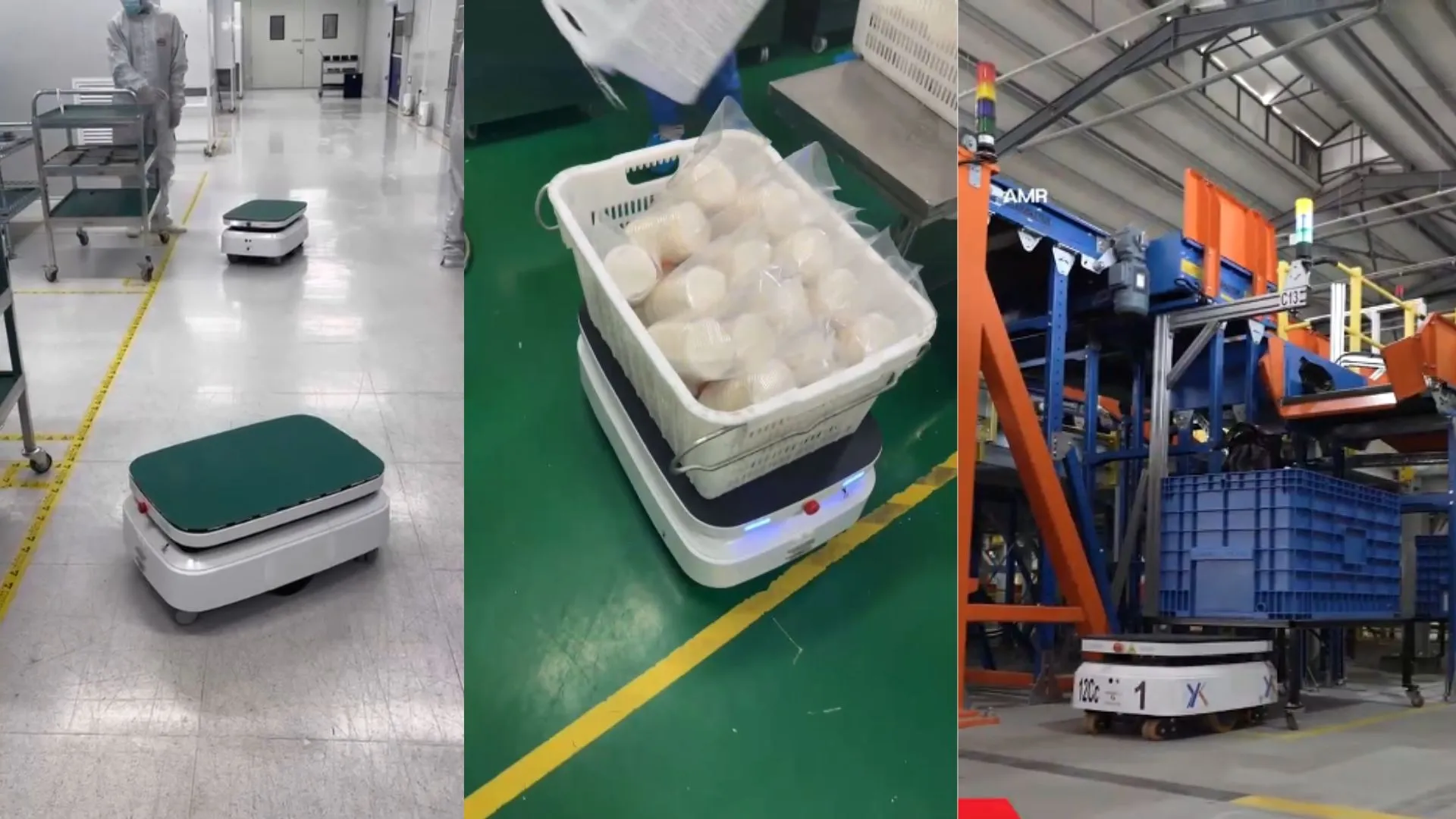
- Representative models: S150, S300, S300E, S600
- Core features:
- Drives under racks to lift and transport goods, lowering required aisle width.
- Supports narrow aisle operation with forward entry & backward exit, flexible turning after rack drop-off.
- Rated load from 150kg to 600kg, compatible with standard and wide racks.
- Application: Raw material transfer from warehouse to production lines, semi-finished goods transit, finished goods inbound & outbound.
3. Top Lift AMRs (L Series)
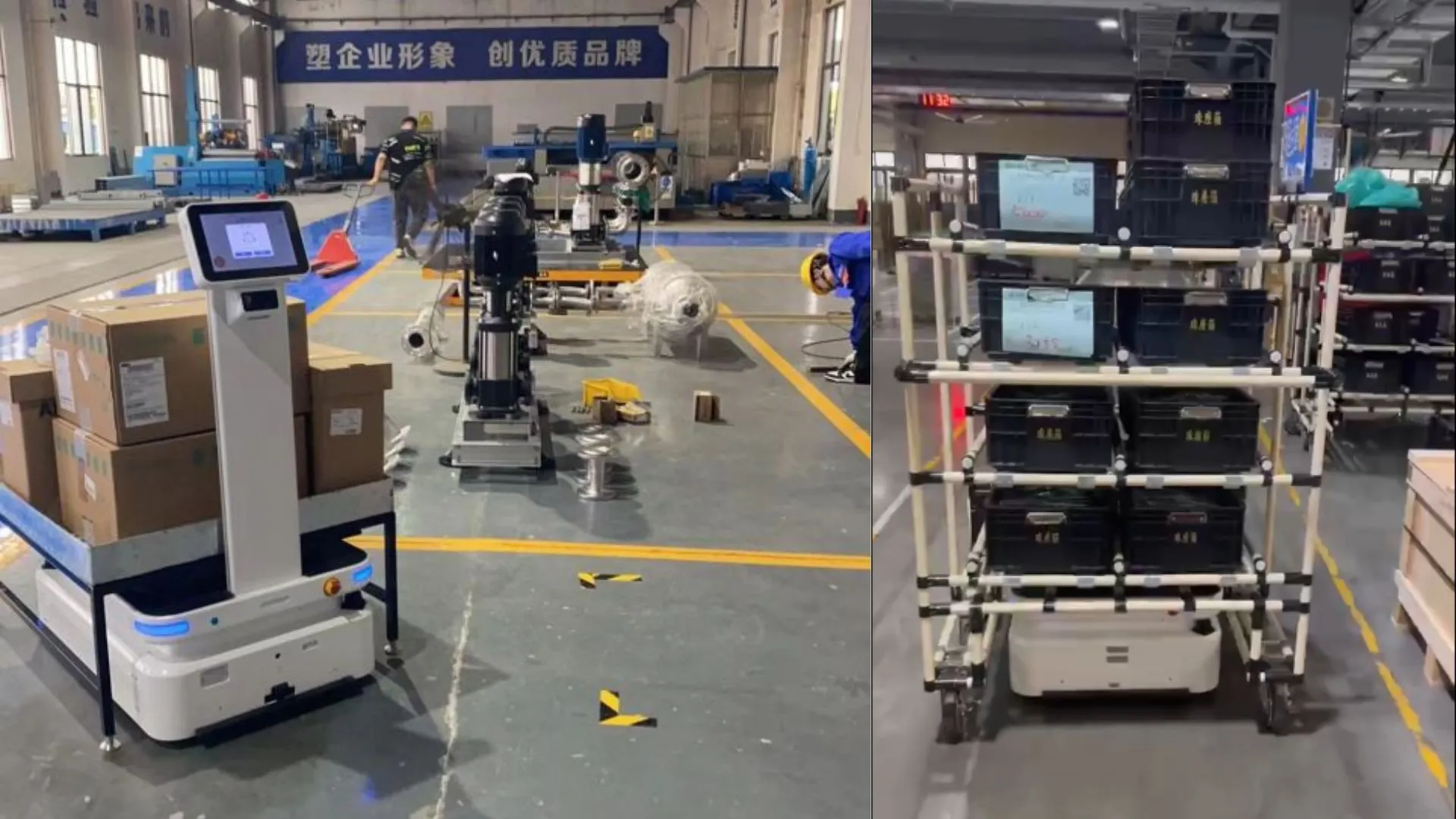
- Representative models: L150, L300, L300E, L600
- Core features:
- Top lifting platform for direct carrying of materials or tooling fixtures.
- Load capacity 300~600kg, maximum lifting height 50mm.
- Application: Heavy-duty side-line materials, molds and jigs transportation.
4. Towing AMRs
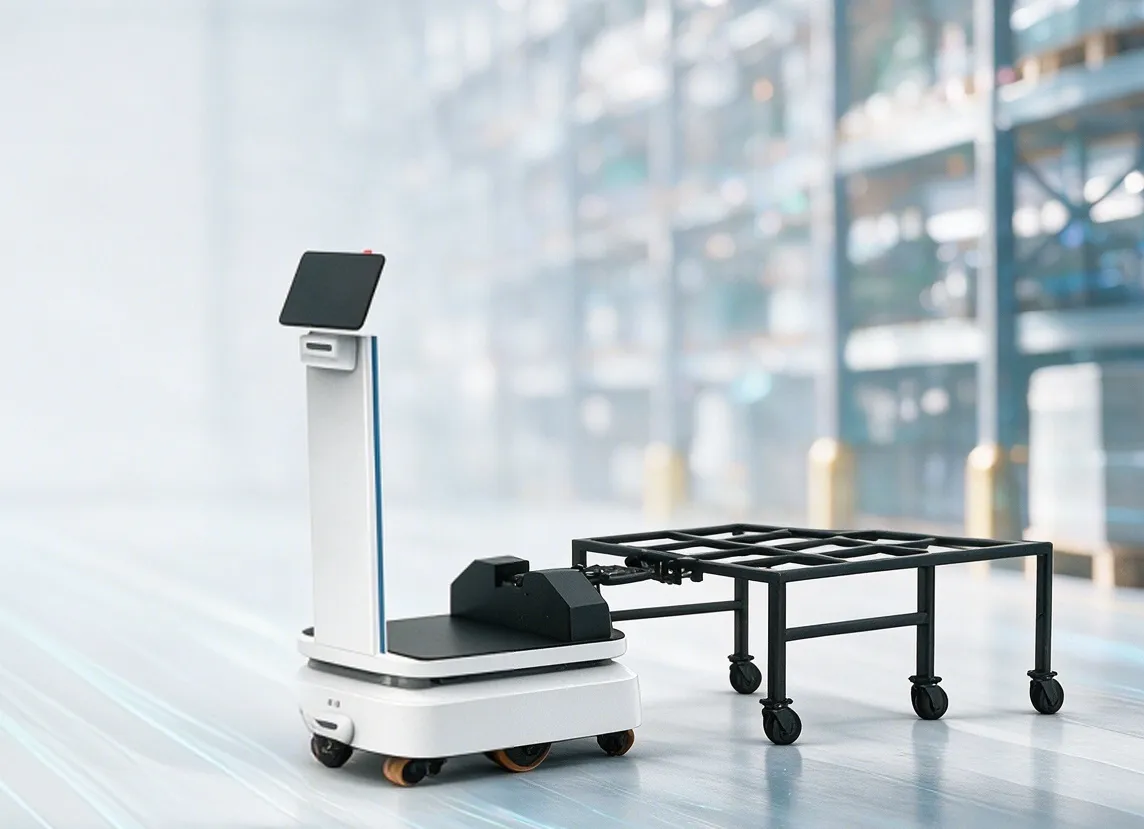
- Representative models: D300-T, D600-T
- Core features:
- Automatically hooks material carts or racks via dedicated interfaces for decoupled vehicle & carrier operation.
- Empty speed: 1.2m/s; full-load speed: 0.5m/s, 15~25 cycles per hour per unit.
- Single operator can manage 3~4 units, ideal for long-distance frequent transit in warehouses and production lines.
5. Roller Composite AMRs
- Core features:
- Built-in roller modules for automatic docking with production and conveyor lines.
- Rated load 100kg, compatible with bins, trays and pallets.
- Application: Flexible connection between automated assembly lines.
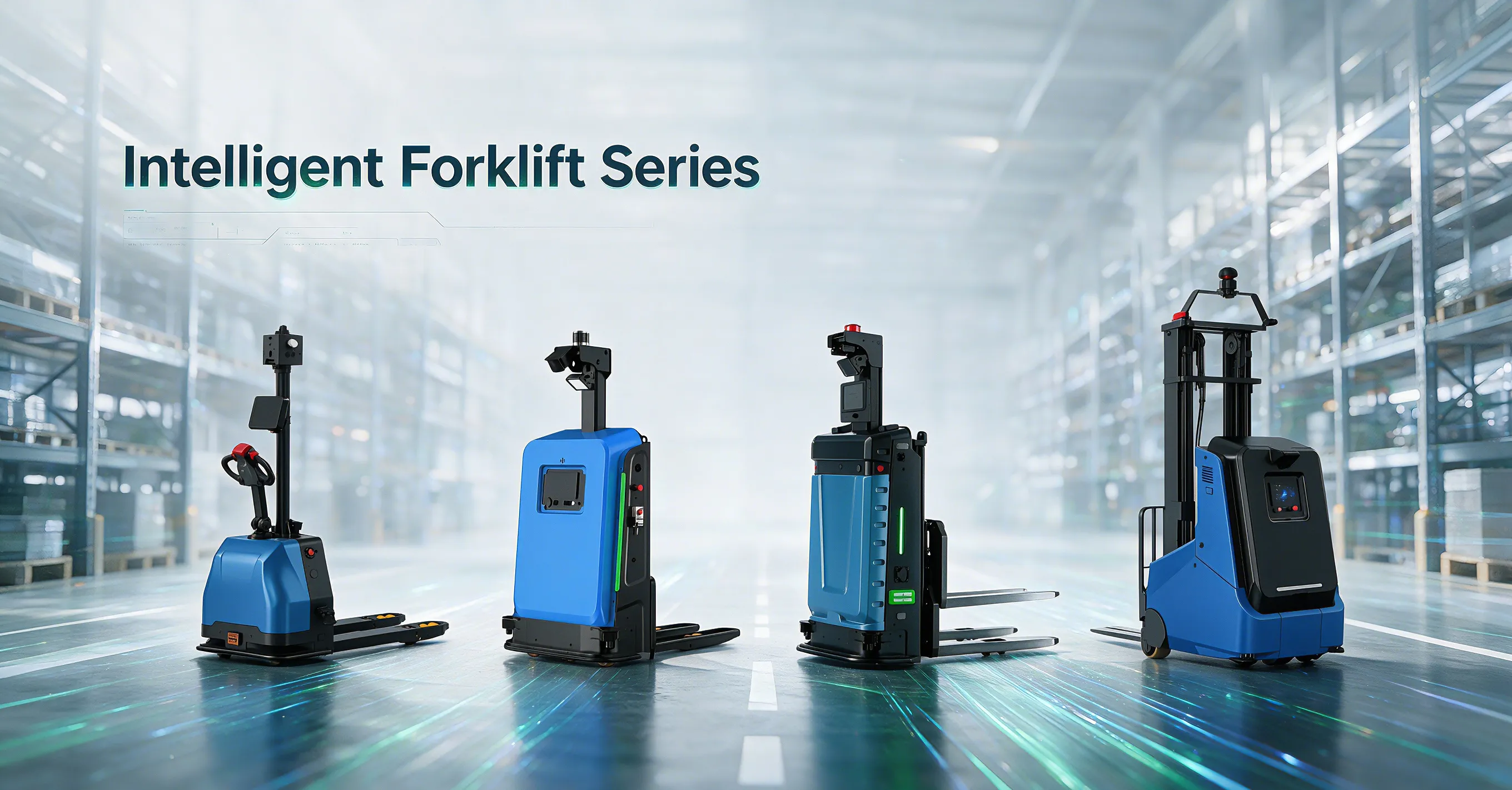
6. Autonomous Forklift Series
- Core features:
- Upgraded model equipped with multi-line LiDAR for 360°×70° blind-spot-free perception.
- Curb weight 706kg, only 2.1m aisle width required for right-angle turns.
- Manual/automatic mode switch via intelligent driving handle, positioning accuracy ±5mm.
- Application: Pallet storage & retrieval, high rack stacking, cross-area heavy-load transportation.
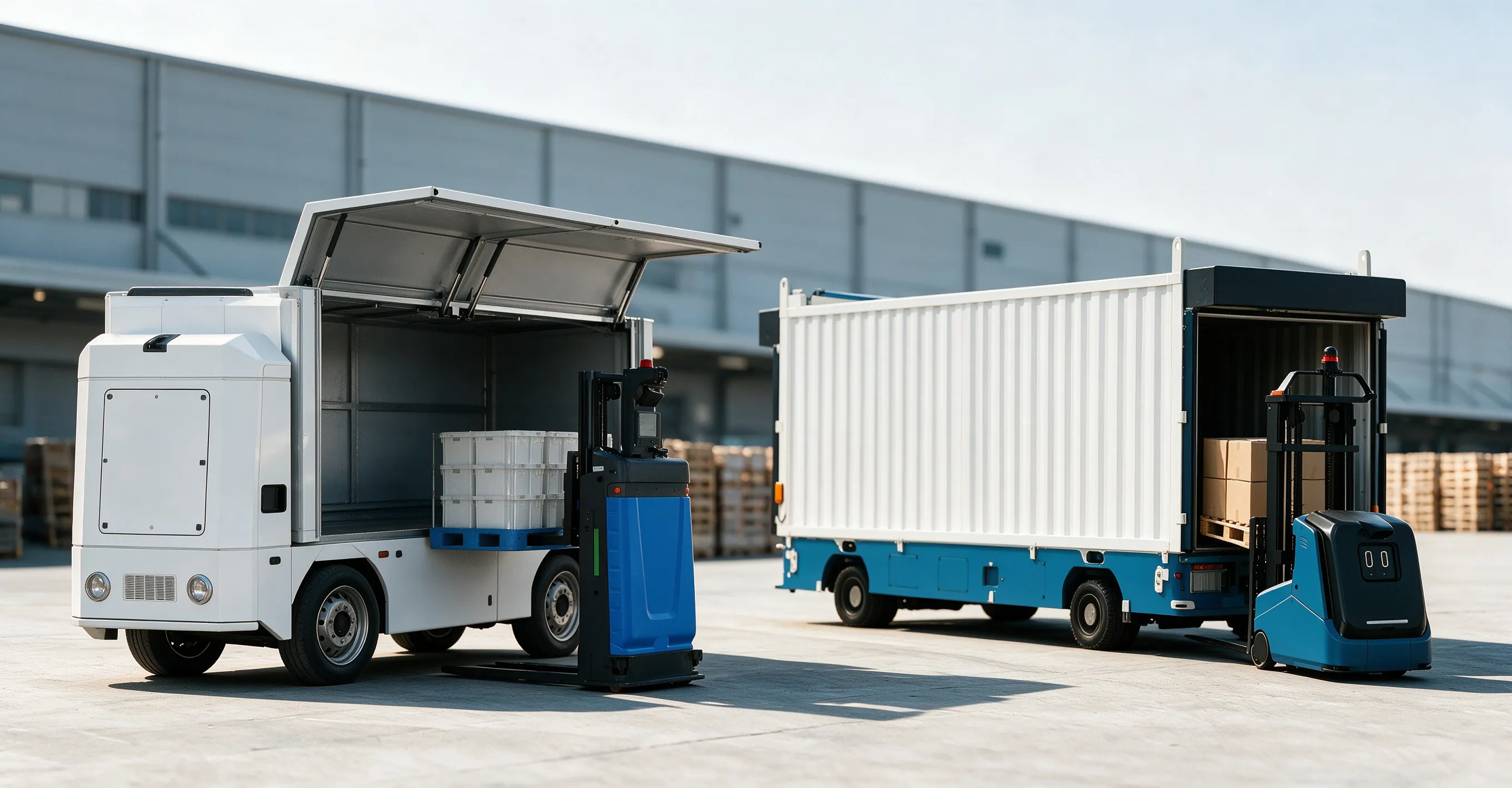
7. Outdoor Autonomous Transporters (V-2100 / V-10T)
- Core features:
- Load capacity 2.1~10 tons, IP55 protection grade, seamless indoor & outdoor operation.
- End-to-end connection with indoor AMRs, autonomous forklifts and outdoor unmanned vehicles.
- Application: Cross-area material transit in large factories and industrial parks.
3. Technical Advantages
- Full Self-developed L4 Autonomous Driving Technology
- Self-developed AX‑Mind algorithm integrating multi-sensor data including LiDAR, depth camera, IMU and ultrasonic sensors.
- Multi-level global & local navigation supporting dynamic path planning, active obstacle avoidance and 3D barrier detection.
- Centimeter-level positioning accuracy (±2cm), stable localization even when over 90% of the environment changes.
- Zero-Cost Remote Deployment
- No magnetic strips or QR codes required; remote mapping via PC, tablet or mobile phone with zero on-site staff, fully operational within 10 minutes.
- Supports cloud map editing, VR virtual mapping and one-click automatic charging.
- Intelligent Multi-Robot Dispatching
- Dual dispatching system: V2X near-field coordination + cloud MFQ scheduling, realizing queue driving, narrow aisle alternating passing and task priority management.
- Mixed-model dispatching for delivery robots, underlift AMRs and forklifts with automatic load balancing and collision avoidance.
- Seamless integration with WMS/MES/ERP via open RESTful APIs and SDKs.
- End-to-End Full Automation
- Scheduled automatic tasks, autonomous navigation, self-service elevator/door/gate passage.
- Automatic low-battery return charging and full traceable task records.
- 7×24 continuous operation to replace repetitive manual handling work.
- Open Development Platform
- Source-code-level openness: Chassis-level open APIs & SDKs, modularized algorithm architecture.
- Customizable business logic via secondary development, compatible with peripherals such as call buttons, barcode scanners and RFID readers.
- Interconnectable with elevator control systems, automatic doors and all types of IoT equipment.
- Industrial-Grade Reliability
- 5-year service life with 1-year standard warranty.
- Certified with CE, FCC, KC, UN38.3 and other domestic & international certificates.
- Customizable versions for harsh environments including cold storage, outdoor spaces and high-humidity workshops.
4. Deployment & Service Modes
- Public Cloud Service Connect to cloud via 4G or WiFi with full remote functions including task calling, deployment, dispatching and monitoring; suitable for factories with external network access and willingness to adopt standard cloud services.
- Private Deployment Cloud services deployed on customer’s internal on-premise servers with separate fees for hardware and deployment services; for factories with strict data privacy requirements.
- Fully Offline Operation No internet connection; robots communicate via near-field signals, mapping and control completed offline through PC or tablet; ideal for confidential workshops and network-free zones.
Standard Deployment Process: Project Assessment → Site Survey → Map Generation → Parameter Configuration → Task Issuance → Acceptance & Delivery. The SkyEye 3D vision rack recognition system can be optionally equipped for real-time rack status synchronization.
5. Typical Application Scenarios & Benefits
Scenario 1: Production Line Side-Line Material Delivery
- Equipment: AX6112 / AX8112 delivery robots, delivering fixed-quantity materials to workstations on production cycles.
- Outcome: Eliminates frequent manual material runs, material delivery accuracy reaches 99.9%, better alignment with production beats.
Scenario 2: Raw Material Transfer from Warehouse to Production Lines
- Equipment: S Series underlift AMRs or D300-T towing robots transporting raw materials from central warehouse to side-line storage.
- Outcome: 70% labor reduction, automatic material calling and unmanned delivery.
Scenario 3: Cross-Floor & Cross-Area Transportation
- Equipment: AX series delivery robots with automatic elevator & door crossing for multi-floor material circulation.
- Outcome: Removes intermediate transit links and shortens logistics lead time.
Scenario 4: Heavy-Duty Material & Pallet Handling
- Equipment: FT2000 autonomous forklifts for pallet stacking in 2.1m narrow aisles.
- Outcome: 15% higher warehouse space utilization rate, 25% improved forklift operation efficiency.
Scenario 5: Outdoor Park Short-Haul Transit
- Equipment: V‑2100 outdoor autonomous transporters for unmanned transport between factory buildings and warehouses.
- Outcome: Eliminates indoor-outdoor logistics breakpoints and realizes full-chain automation.
Real Case: Electronic Manufacturing Factory
- Deployment: 15 AMRs + RCS dispatching system with auto task priority allocation based on product BOMs, narrow aisle mutual-exclusion locks and vision rack identification.
- Results: 25% higher assembly efficiency, error rate dropped to 0.03%, 80% reduction in workplace injuries.
6. Summary
AUTOXING factory AMR solution centers on lightweight design, zero-cost deployment, fully self-developed technology and high openness, covering all scenarios from dozens-of-kilogram light material delivery to multi-ton heavy-load transportation, indoor and outdoor. Delivered as an integrated package of robot hardware, dispatching platform and cloud service, the solution empowers factories to realize automated, digital and flexible logistics, ultimately cutting labor costs, boosting throughput, improving product quality and reducing manual reliance.
Contact AUTOXING’s sales and technical teams for detailed model specifications, deployment quotations and customized solutions.
Smart Factory
AUTOXING has developed a full-scenario intelligent logistics solution centered on lightweight industrial AMRs for factory applications, covering production line logistics, warehouse distribution and cross-area material transportation. Integrated with self-developed autonomous driving technology, cloud dispatching system and open development platform, this solution addresses core pain points of traditional factory logistics including low efficiency, labor shortages, crude management and insufficient flexibility. Full introduction is provided from five dimensions: solution architecture, core product matrix, technical strengths, deployment modes and typical scenarios.
1. Overall Solution Architecture
AUTOXING factory AMR solution adopts a three-layer "Terminal-Transmission-Cloud" framework:
- Terminal (Robots): A full range of mobile robots including delivery, underlift, towing, forklift and roller-composite models, executing physical tasks such as material transportation and production line docking.
- Transmission (Dispatching & Communication): RCS dispatching system, V2X near-field coordination, interconnection of elevators, automatic doors and IoT devices, realizing multi-robot collaboration, traffic management, task queuing and equipment linkage.
- Cloud (Management & Data): Robot management platform, operation monitoring dashboard, remote deployment tools and open APIs, supporting map management, task issuing, real-time status monitoring, data analysis and seamless integration with WMS, MES and ERP systems.
The solution supports 3 operation modes: public cloud, private deployment and fully offline operation, matching different factory network conditions and data security standards.
2. Core Product Matrix
Diversified AMRs and supporting equipment are offered to meet varied transportation demands across all factory links:
1. Lightweight Industrial Delivery Robots (Flagship Product Line)
- Representative models: AX6112 (80kg load), AX6113 (150~300kg load), AX8113 (600kg load), AX2112 (independent multi-bin distribution)
- Core features:
- Dynamic navigation based on global maps, nearly zero-cost remote deployment, ready for operation within 10 minutes.
- Autonomous obstacle avoidance, automatic elevator access, automatic door crossing and cross-floor operation.
- Combinable multi-bin modules, scheduled fixed-route patrols, 7×24 non-stop operation.
- Application: Production line feeding, side-line material delivery, quality inspection sampling and finished goods warehousing.
- Market coverage: Widely applied in 3C electronics, semiconductors, precision instruments, food & beverage, pharmaceutical manufacturing and other industries.
2. Underlift AMRs (S Series)
- Representative models: S150, S300, S300E, S600
- Core features:
- Drives under racks to lift and transport goods, lowering required aisle width.
- Supports narrow aisle operation with forward entry & backward exit, flexible turning after rack drop-off.
- Rated load from 150kg to 600kg, compatible with standard and wide racks.
- Application: Raw material transfer from warehouse to production lines, semi-finished goods transit, finished goods inbound & outbound.
3. Top Lift AMRs (L Series)
- Representative models: L150, L300, L300E, L600
- Core features:
- Top lifting platform for direct carrying of materials or tooling fixtures.
- Load capacity 300~600kg, maximum lifting height 50mm.
- Application: Heavy-duty side-line materials, molds and jigs transportation.
4. Towing AMRs
- Representative models: D300-T, D600-T
- Core features:
- Automatically hooks material carts or racks via dedicated interfaces for decoupled vehicle & carrier operation.
- Empty speed: 1.2m/s; full-load speed: 0.5m/s, 15~25 cycles per hour per unit.
- Single operator can manage 3~4 units, ideal for long-distance frequent transit in warehouses and production lines.
5. Roller Composite AMRs
- Core features:
- Built-in roller modules for automatic docking with production and conveyor lines.
- Rated load 100kg, compatible with bins, trays and pallets.
- Application: Flexible connection between automated assembly lines.
6. Autonomous Forklift Series
- Core features:
- Upgraded model equipped with multi-line LiDAR for 360°×70° blind-spot-free perception.
- Curb weight 706kg, only 2.1m aisle width required for right-angle turns.
- Manual/automatic mode switch via intelligent driving handle, positioning accuracy ±5mm.
- Application: Pallet storage & retrieval, high rack stacking, cross-area heavy-load transportation.
7. Outdoor Autonomous Transporters (V-2100 / V-10T)
- Core features:
- Load capacity 2.1~10 tons, IP55 protection grade, seamless indoor & outdoor operation.
- End-to-end connection with indoor AMRs, autonomous forklifts and outdoor unmanned vehicles.
- Application: Cross-area material transit in large factories and industrial parks.
3. Technical Advantages
- Full Self-developed L4 Autonomous Driving Technology
- Self-developed AX‑Mind algorithm integrating multi-sensor data including LiDAR, depth camera, IMU and ultrasonic sensors.
- Multi-level global & local navigation supporting dynamic path planning, active obstacle avoidance and 3D barrier detection.
- Centimeter-level positioning accuracy (±2cm), stable localization even when over 90% of the environment changes.
- Zero-Cost Remote Deployment
- No magnetic strips or QR codes required; remote mapping via PC, tablet or mobile phone with zero on-site staff, fully operational within 10 minutes.
- Supports cloud map editing, VR virtual mapping and one-click automatic charging.
- Intelligent Multi-Robot Dispatching
- Dual dispatching system: V2X near-field coordination + cloud MFQ scheduling, realizing queue driving, narrow aisle alternating passing and task priority management.
- Mixed-model dispatching for delivery robots, underlift AMRs and forklifts with automatic load balancing and collision avoidance.
- Seamless integration with WMS/MES/ERP via open RESTful APIs and SDKs.
- End-to-End Full Automation
- Scheduled automatic tasks, autonomous navigation, self-service elevator/door/gate passage.
- Automatic low-battery return charging and full traceable task records.
- 7×24 continuous operation to replace repetitive manual handling work.
- Open Development Platform
- Source-code-level openness: Chassis-level open APIs & SDKs, modularized algorithm architecture.
- Customizable business logic via secondary development, compatible with peripherals such as call buttons, barcode scanners and RFID readers.
- Interconnectable with elevator control systems, automatic doors and all types of IoT equipment.
- Industrial-Grade Reliability
- 5-year service life with 1-year standard warranty.
- Certified with CE, FCC, KC, UN38.3 and other domestic & international certificates.
- Customizable versions for harsh environments including cold storage, outdoor spaces and high-humidity workshops.
4. Deployment & Service Modes
- Public Cloud Service Connect to cloud via 4G or WiFi with full remote functions including task calling, deployment, dispatching and monitoring; suitable for factories with external network access and willingness to adopt standard cloud services.
- Private Deployment Cloud services deployed on customer’s internal on-premise servers with separate fees for hardware and deployment services; for factories with strict data privacy requirements.
- Fully Offline Operation No internet connection; robots communicate via near-field signals, mapping and control completed offline through PC or tablet; ideal for confidential workshops and network-free zones.
Standard Deployment Process: Project Assessment → Site Survey → Map Generation → Parameter Configuration → Task Issuance → Acceptance & Delivery. The SkyEye 3D vision rack recognition system can be optionally equipped for real-time rack status synchronization.
5. Typical Application Scenarios & Benefits
Scenario 1: Production Line Side-Line Material Delivery
- Equipment: AX6112 / AX8112 delivery robots, delivering fixed-quantity materials to workstations on production cycles.
- Outcome: Eliminates frequent manual material runs, material delivery accuracy reaches 99.9%, better alignment with production beats.
Scenario 2: Raw Material Transfer from Warehouse to Production Lines
- Equipment: S Series underlift AMRs or D300-T towing robots transporting raw materials from central warehouse to side-line storage.
- Outcome: 70% labor reduction, automatic material calling and unmanned delivery.
Scenario 3: Cross-Floor & Cross-Area Transportation
- Equipment: AX series delivery robots with automatic elevator & door crossing for multi-floor material circulation.
- Outcome: Removes intermediate transit links and shortens logistics lead time.
Scenario 4: Heavy-Duty Material & Pallet Handling
- Equipment: FT2000 autonomous forklifts for pallet stacking in 2.1m narrow aisles.
- Outcome: 15% higher warehouse space utilization rate, 25% improved forklift operation efficiency.
Scenario 5: Outdoor Park Short-Haul Transit
- Equipment: V‑2100 outdoor autonomous transporters for unmanned transport between factory buildings and warehouses.
- Outcome: Eliminates indoor-outdoor logistics breakpoints and realizes full-chain automation.
Real Case: Electronic Manufacturing Factory
- Deployment: 15 AMRs + RCS dispatching system with auto task priority allocation based on product BOMs, narrow aisle mutual-exclusion locks and vision rack identification.
- Results: 25% higher assembly efficiency, error rate dropped to 0.03%, 80% reduction in workplace injuries.
6. Summary
AUTOXING factory AMR solution centers on lightweight design, zero-cost deployment, fully self-developed technology and high openness, covering all scenarios from dozens-of-kilogram light material delivery to multi-ton heavy-load transportation, indoor and outdoor. Delivered as an integrated package of robot hardware, dispatching platform and cloud service, the solution empowers factories to realize automated, digital and flexible logistics, ultimately cutting labor costs, boosting throughput, improving product quality and reducing manual reliance.
Contact AUTOXING’s sales and technical teams for detailed model specifications, deployment quotations and customized solutions.


